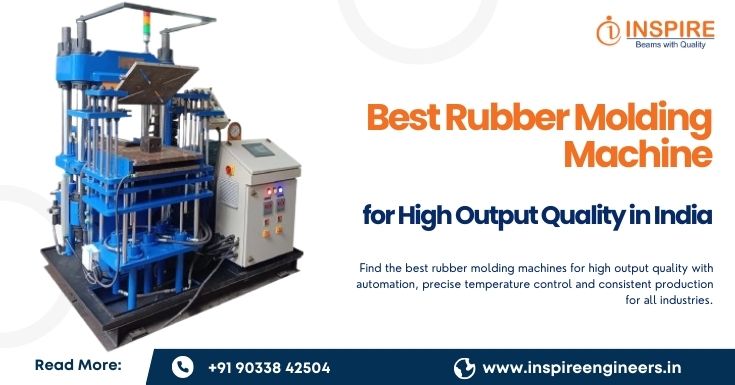
Rubber manufacturing keeps expanding across automotive, electrical, aerospace, medical, and industrial sectors, and every industry now expects higher accuracy, increased efficiency, and long-term durability. To achieve these results, businesses rely on thebest rubber molding machines for high output quality, because these machines consistently transform raw rubber into precise, reliable, and dimensionally stable components.
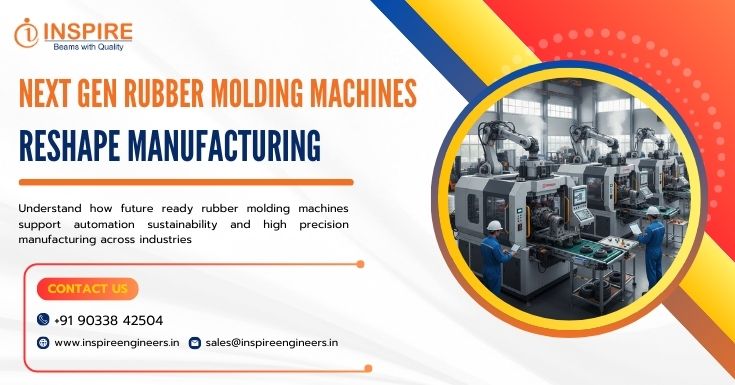
Modern rubber molding technology combines automation, temperature control, pressure regulation, and intelligent curing systems to produce premium rubber parts at a rapid pace. As global competition intensifies, industries adopt high-performance molding machines to maintain quality consistency and production efficiency.
Rubber Molding Machines Guide for Modern Industrial Production
Industrial manufacturing is advancing quickly, and companies must consistently deliver products with uniform design, stable performance, and minimal defects. A Rubber Molding Machines play a vital role in achieving these results because it converts raw or pre-heated rubber into functional, accurately shaped components.
Rubber products remain essential in multiple sectors such as automotive, electronics, medical devices, defense, and consumer goods. Because industries demand stability and precision, the best rubber molding machines for high output quality delivers higher productivity while ensuring every component meets international standards.
Manufacturers also rely on globally recognized quality guidelines, including ASTM Rubber Standards, to maintain accuracy and safety in every product.
What Is a Rubber Molding Machines and Why Does It Matter?
A Rubber Molding Machines shape raw rubber into finished parts using heat, pressure, compression, or injection technology. These machines manufacture components such as:
● Gaskets
● Electrical insulators
● Industrial seals
● Automotive bushings
These parts must perform safely in high-temperature, high-pressure, and high-load environments. Because of this, manufacturers prefer machines that deliver precise temperature control, reduced material waste, smoother finishing, and consistent quality.
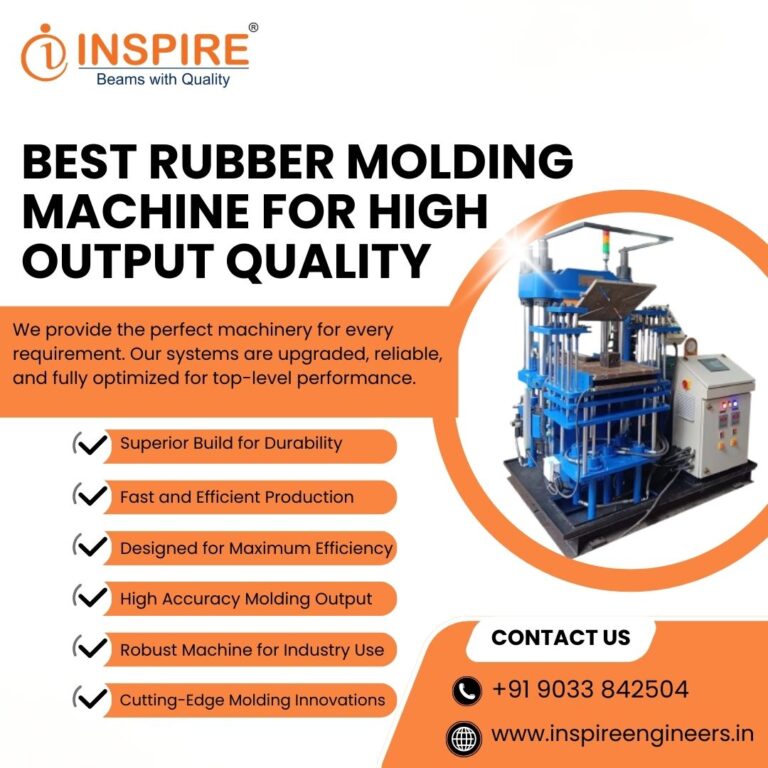
Using the best rubber molding machine for high output quality ensures reliability, speed, and long-term performance in large-scale manufacturing setups.
How the Rubber Molding Process Works
The rubber molding process involves several controlled steps. Each step affects the final product’s strength, elasticity, and dimensional stability. Below is the detailed working cycle followed by most industries.
Material Preparation and Pre-Heating
Rubber compounds are mixed with fillers, stabilizers, color pigments, and additives to enhance performance. Pre-heating improves flow, ensuring that molten rubber spreads evenly inside mold cavities. This stage supports better curing and reduces variations.
The process uses scientific vulcanization principles that increase elasticity and long-term durability.
Mold Filling Through Compression, Transfer, or Injection
Depending on the machine type, rubber is filled into molds through:
● Compression plates
● Transfer channels
● Injection nozzles
Smooth mold filling reduces air bubbles, prevents uneven thickness, and ensures accurate formation.
Curing the Rubber Under Controlled Pressure
Curing triggers the vulcanization reaction, where heat and pressure form strong chemical bonds inside the rubber. Proper curing ensures the final component achieves maximum strength, hardness, and precision.
Demand for molded rubber components keeps increasing as industries expand globally.
Types of Rubber Molding Machines and Their Functions
Different industries require different molding technologies depending on complexity, batch size, and accuracy requirements. Below are the most widely used Rubber Molding Machine types.
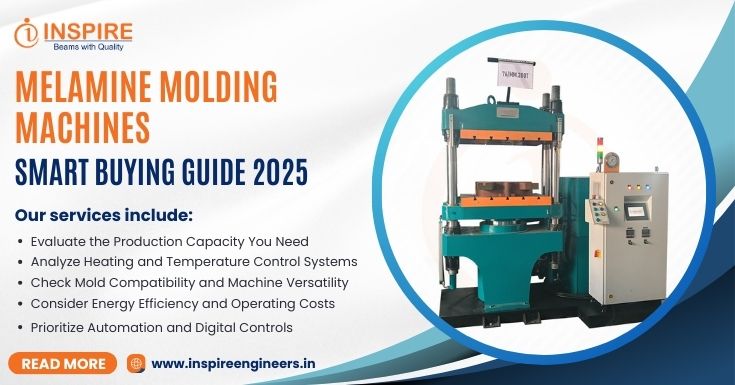
1. Rubber Compression Molding Machines
Rubber Compression molding is one of the oldest and most reliable techniques used for manufacturing:
● Large rubber pads
● Thick gaskets
● Heavy-duty seals
● Bushings
Compression molding is one of the oldest and most reliable techniques used for manufacturing:
2.Vacuum Type Rubber Molding Machines
A Vacuum Rubber Molding Machine removes all trapped air from the mold cavity before the molding process begins. This advanced vacuum system delivers superior product quality and ensures:
● Bubble-free products
● Smooth surface finishing
● Higher strength
● Precise detailing
It is widely used for high-precision components in medical and electronic industries.
3. Fully Auto – Single Station Rubber Molding Machines
Fully automatic single-station machines are engineered to deliver maximum efficiency and precision in rubber production. They offer:
● High-speed production cycles
● Zero operator error
● Accurate temperature and pressure control
● Intelligent PLC-based automation
These machines are ideal for large factories that require continuous and stable output.
4. Semi-Automatic Rubber Molding Machines
Semi-automatic rubber molding machines offer the perfect balance between manual control and automated efficiency. These systems are designed to give manufacturers more flexibility while still maintaining consistent production quality. They offer:
● Flexible control
● Lower initial investment
● Good repeatability
They are ideal for medium-scale manufacturers that want automation without high capital cost.
5. Silicone Molding Machines
Silicone molding machines are specially engineered to produce high-precision components used across medical, automotive, electrical, and food industries. These machines are commonly used for manufacturing:
● Medical-grade silicone parts
● Heat-resistant seals
● Food-grade components
● High-flexibility products
Silicone compounds require precise temperature control, and these machines ensure stability, purity, and consistency.
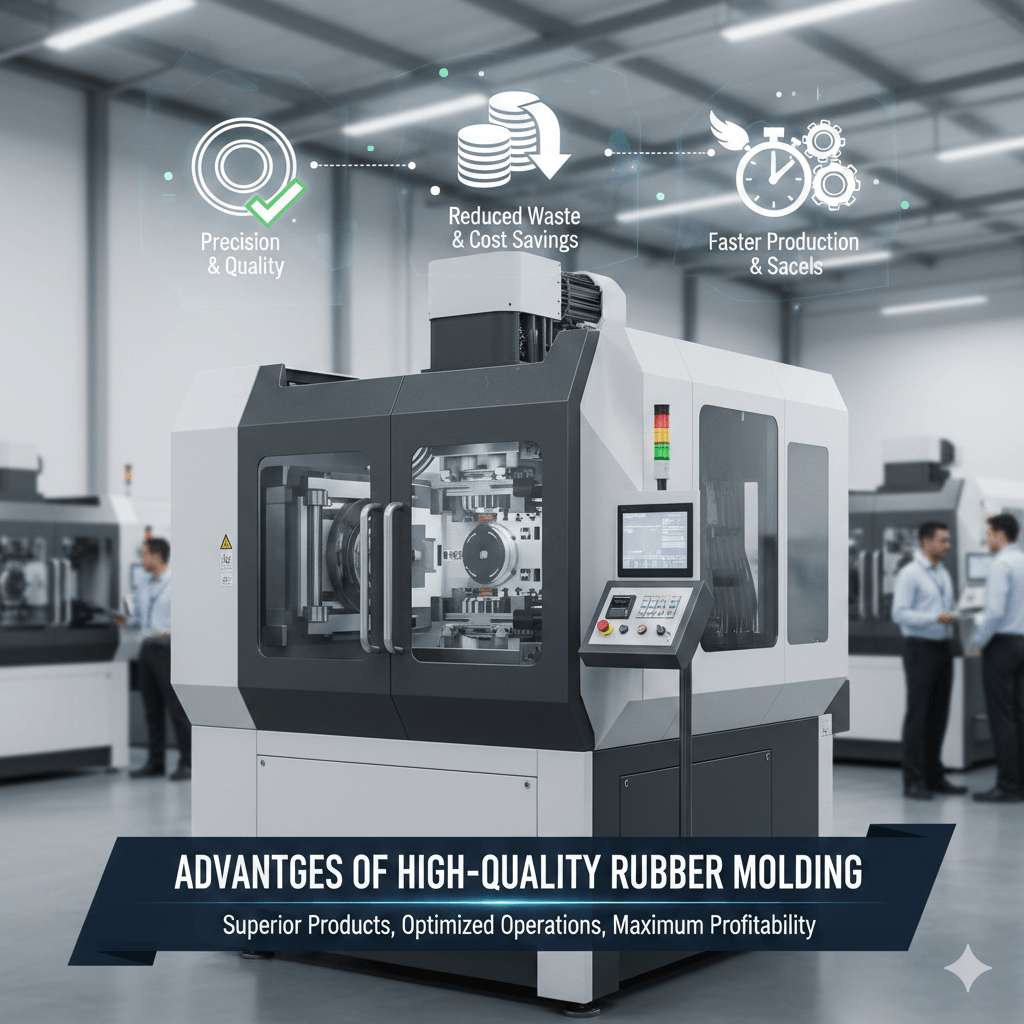
Major Advantages of Using a High-Quality Rubber Molding Machine
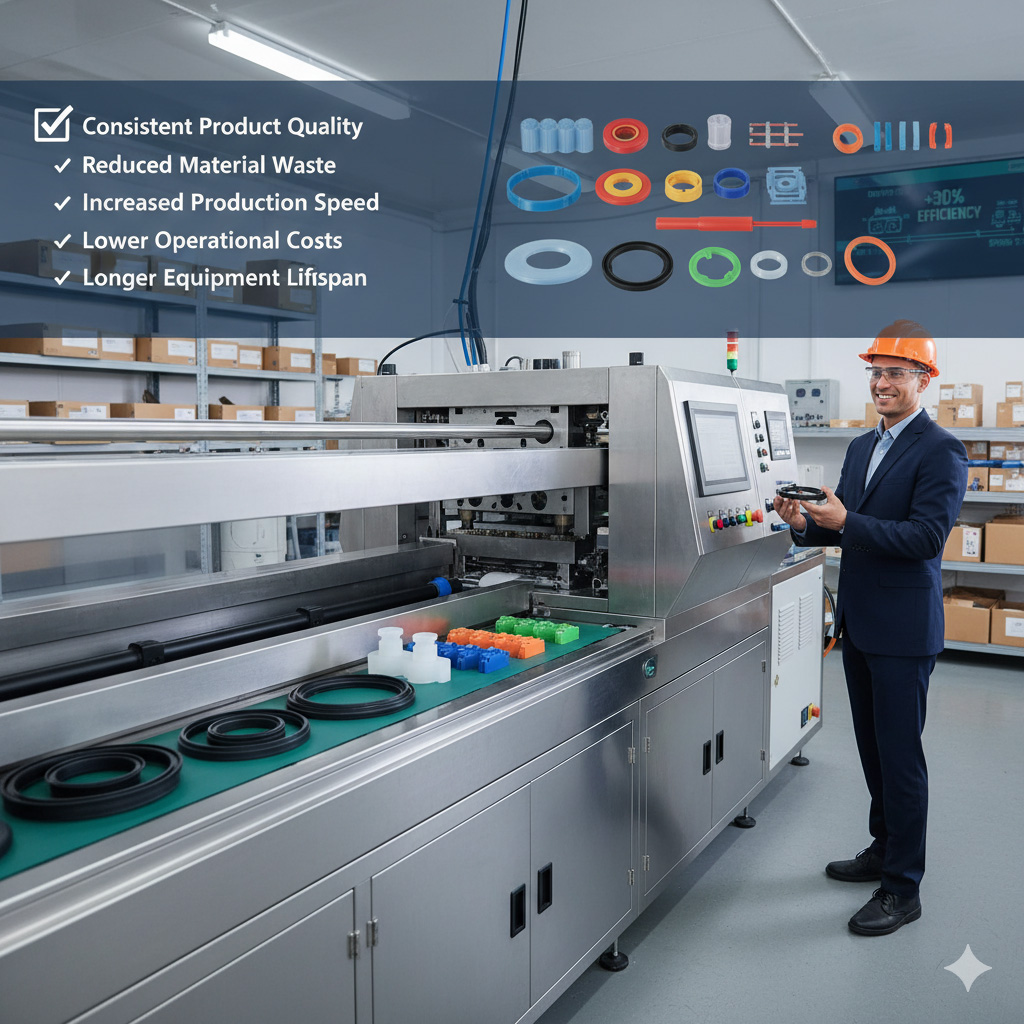
Investing in a premium Rubber Molding Machine brings long-term benefits to manufacturers by improving production efficiency, product accuracy, and operational return on investment. Modern machines combine automation, intelligent control systems, and advanced heating technology to ensure stable, high-volume output with consistent quality.
Increased Output with Lower Cycle Times
Faster curing and smooth automation reduce cycle times, allowing manufacturers to:
- Complete bulk orders quickly
- Maintain delivery schedules
- Improve factory output
Lower cycle time ensures better profitability.
Better Accuracy and Repeatability
A high-quality Rubber Molding Machine consistently delivers precise and repeatable results, even during long production cycles. These machines are engineered to maintain:
- Stable pressure
- Uniform heat distribution
- Precise filling
This leads to lower rejection rates and globally compatible product quality.

How to Choose the Right Rubber Molding Machine
Selecting the right Rubber Molding Machine is essential for achieving high output quality, consistent performance, and long-term production efficiency.
Evaluate Production Speed and Volume
For high-volume manufacturing, choose injection or fully automatic machines for faster cycles and stable automation.
For medium or low-volume setups, compression or semi-automatic models offer reliable performance with lower investment.
Check Tonnage and Heating Technology
Tonnage ensures proper clamping force, while heating technology ensures accurate curing. Always pick machines with:
● Uniform platen heating
● Fast temperature response
● Precise control systems
Frequently Asked Questions About Rubber Molding Machines
Injection molding machines are ideal because they offer rapid cycle times and full automation.
With proper maintenance, most machines last 10–15 years or longer.
Tonnage depends on product size, mold area, and required pressure. Our team can help calculate exact specifications.
Automotive, electronics, aerospace, medical, consumer goods, industrial machinery, and more.
Yes. Fully automatic machines significantly lower manual labor dependency and improve operational efficiency.
Conclusion: Why Your Industry Needs a High-Performance Rubber Molding Machine
Industrial demand is rising across all sectors, and manufacturers must upgrade to advanced machines to maintain quality and competitiveness. A Rubber Molding Machine delivers accuracy, speed, low waste, and consistent production—essential factors for any modern manufacturing environment.
Whether you operate in automotive, electrical, medical, or general manufacturing, investing in a robust molding system ensures long-term reliability and improved profitability.