Choosing the right Cutting Press Machines is one of the most important decisions for manufacturers aiming for precision, productivity, and long-term operational efficiency. Since different industries work with different materials, thicknesses, and production volumes, a one-size-fits-all approach never works in industrial cutting operations.
When manufacturers select the wrong cutting press machines, they often face issues such as material wastage, inconsistent cutting quality, frequent machine breakdowns, and rising maintenance costs. Therefore, understanding how to choose the right cutting press machines for your industry helps businesses avoid costly mistakes and build a stable, scalable manufacturing process.
This in-depth guide explains cutting press machine types, industry applications, technical features, selection factors, and future trends so manufacturers can make confident, data-driven decisions.
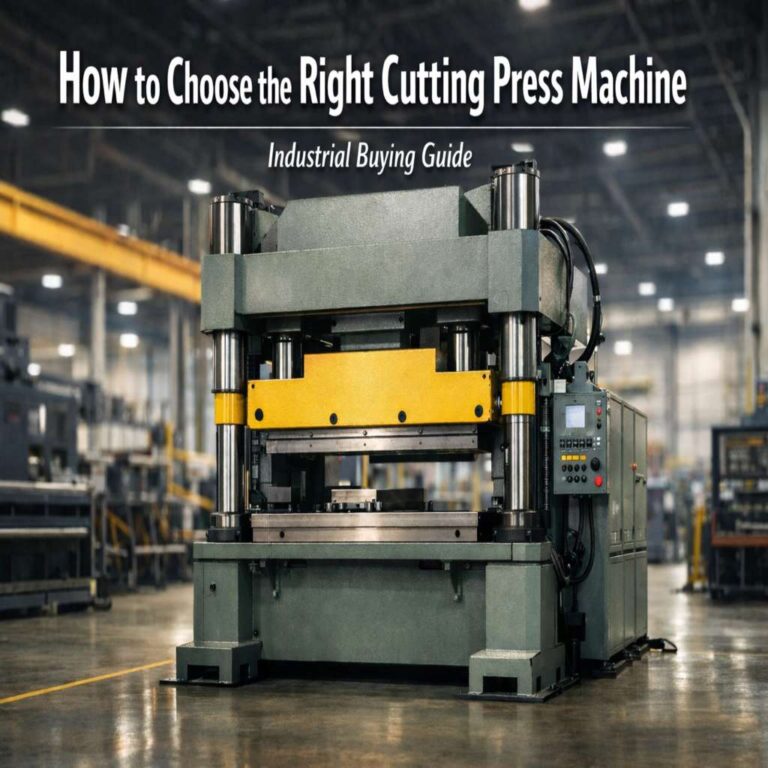
Understanding the Importance of a Cutting Press Machines in Modern Manufacturing
A cutting press machines is an industrial system that applies controlled pressure to cut materials into precise shapes using dies or molds. Unlike manual or semi-manual cutting methods, cutting press machines deliver uniform results, improved safety, and repeatable accuracy across large production batches.
As industries continue to shift toward automation and mass production, cutting press machines have become a core component of modern manufacturing plants. Moreover, these machines reduce dependency on manual labor, minimize human error, and improve overall production consistency.
Because precision directly impacts product quality, industries increasingly rely on cutting press machines to maintain tight tolerances and standardized output.
Why Selecting the Right Cutting Press Machines Matters
Every manufacturing environment operates under unique technical and commercial requirements. As a result, choosing a cutting press machines without evaluating actual production needs can negatively affect efficiency and profitability.
On the other hand, selecting the right cutting press machines ensures:
- Smooth and uninterrupted operations
- Consistent cutting accuracy
- Lower material wastage
- Reduced maintenance and downtime
- Better return on investment
In addition, modern industries demand machines that support scalability, automation, and safety compliance. Therefore, machines selection should be treated as a strategic investment, not just a purchasing decision.
Types of Cutting Press Machines Used in Industries
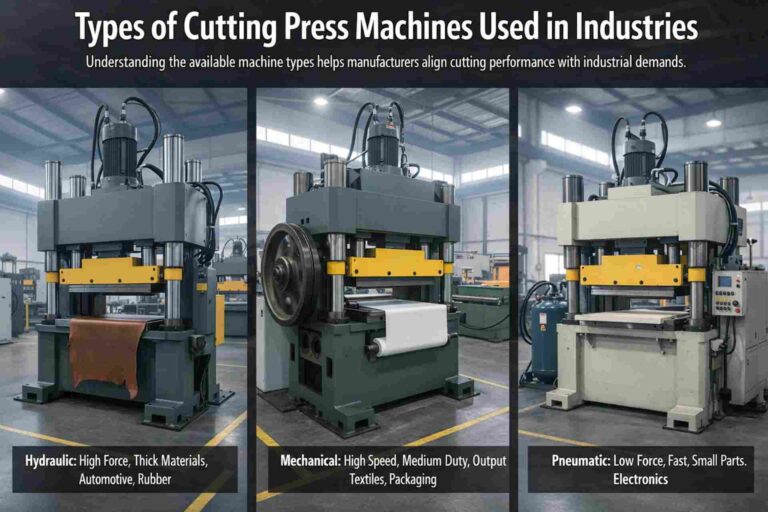
Understanding the available machine types helps manufacturers align cutting performance with industrial demands.
Hydraulic Cutting Press Machines
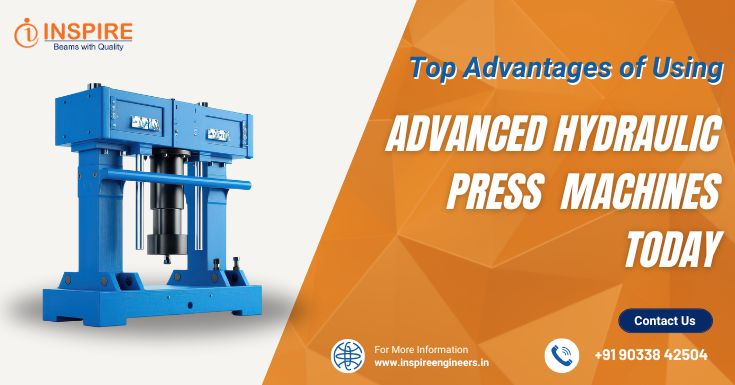
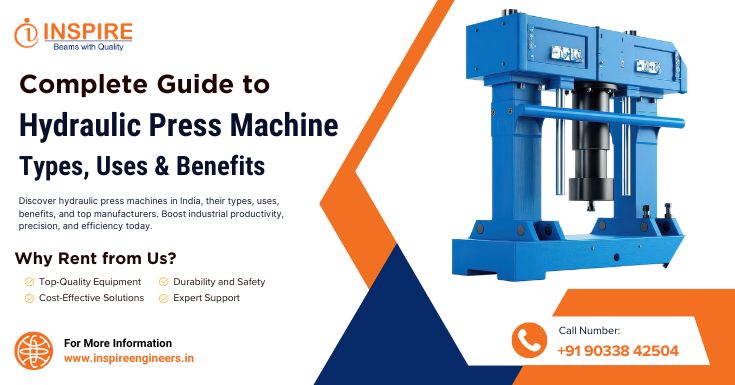
A hydraulic cutting press machines uses hydraulic pressure to generate high cutting force. Because of its strength, stability, and accuracy, it is widely used in heavy-duty industrial applications
Hydraulic cutting press machines handle thick, dense, and hard materials efficiently. As a result, industries such as rubber, plastic, automotive, and insulation manufacturing prefer these machines for precision and consistency.
In addition, hydraulic systems allow better pressure control, making them ideal for complex and high-accuracy cutting tasks.
Mechanical Cutting Press Machines
Mechanical cutting press machines operate using mechanical motion driven by a flywheel and crank mechanism. These machines offer faster cycle times and consistent stroke movement.
Although mechanical cutting press machines generate lower pressure compared to hydraulic systems, they perform well in medium-duty applications where speed is critical. Industries that prioritize high output rates often choose mechanical machines for continuous production.
Pneumatic Cutting Press Machines
Pneumatic cutting press machines rely on compressed air to perform cutting operations. Therefore, they are best suited for lightweight materials and low-pressure cutting requirements.
These machines offer simple operation, lower energy consumption, and reduced initial investment. As a result, small workshops and limited-scale production units often prefer pneumatic cutting press machines.
Key Factors to Consider When Choosing a Cutting Press Machines
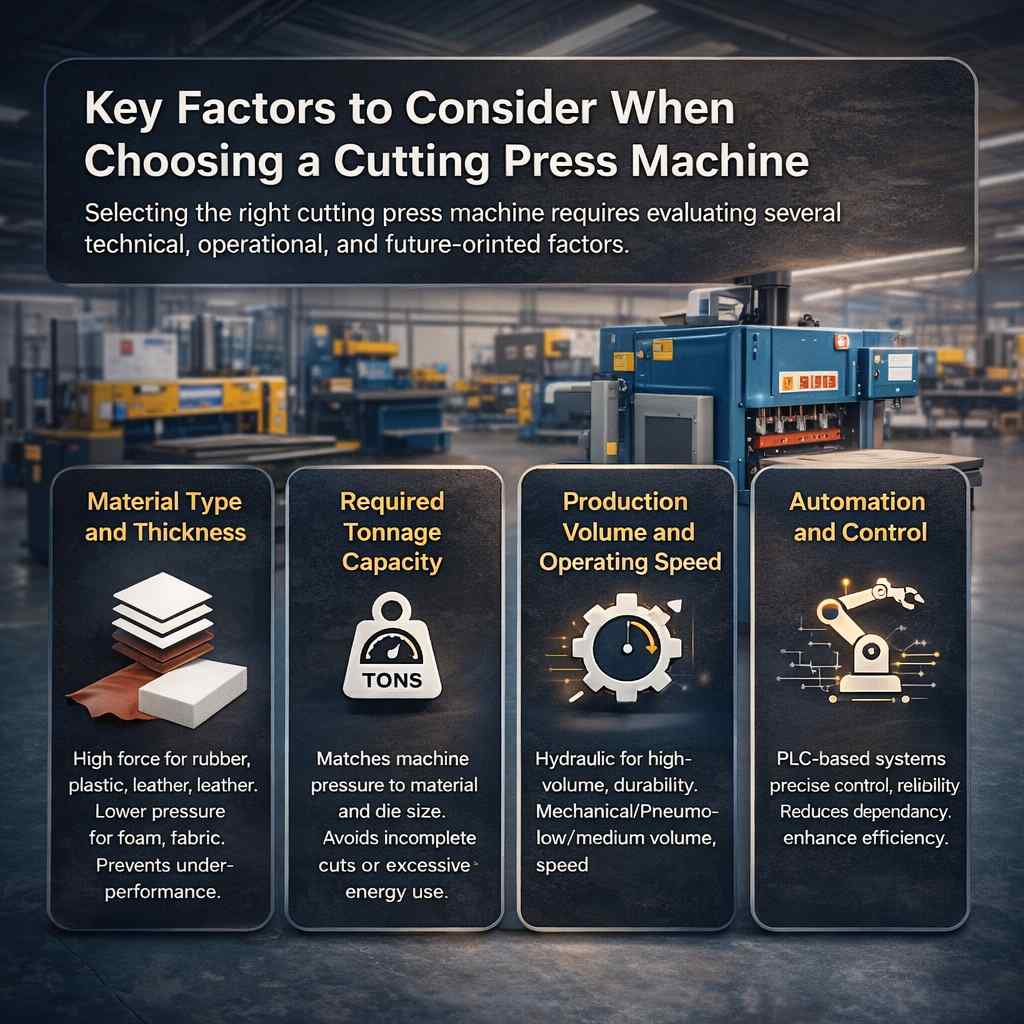
Selecting the right cutting press machine requires evaluating several technical, operational, and future-oriented factors.
1. Material Type and Thickness
Material characteristics directly influence cutting performance. For example, rubber, plastic, leather, and composite materials require higher cutting force, while foam, fabric, and textile materials need relatively lower pressure.
Therefore, manufacturers must clearly define material thickness, density, and resistance before finalizing machine specifications. This approach prevents underperformance and ensures clean, accurate cuts.
2. Required Tonnage Capacity
Tonnage capacity determines how much pressure a cutting press machine can apply. Selecting insufficient tonnage results in incomplete cuts and inconsistent output. However, choosing excessive tonnage increases power consumption and operational costs.
A balanced tonnage selection ensures optimal performance without unnecessary energy loss. Manufacturers should always calculate required cutting force based on material type and die size
3. Production Volume and Operating Speed
High-volume manufacturing environments demand machines with faster cycle times, durable construction, and reliable performance. Consequently, hydraulic cutting press machines are often preferred for large-scale production plants.
On the other hand, low to medium production facilities may choose mechanical or pneumatic machines depending on speed, accuracy, and budget requirements.
4. Automation and Control Requirements
Automation improves repeatability, reduces operator dependency, and enhances production efficiency. Therefore, manufacturers planning future expansion should consider machines with automation-ready designs.
Industry Wise Applications of Cutting Press Machines
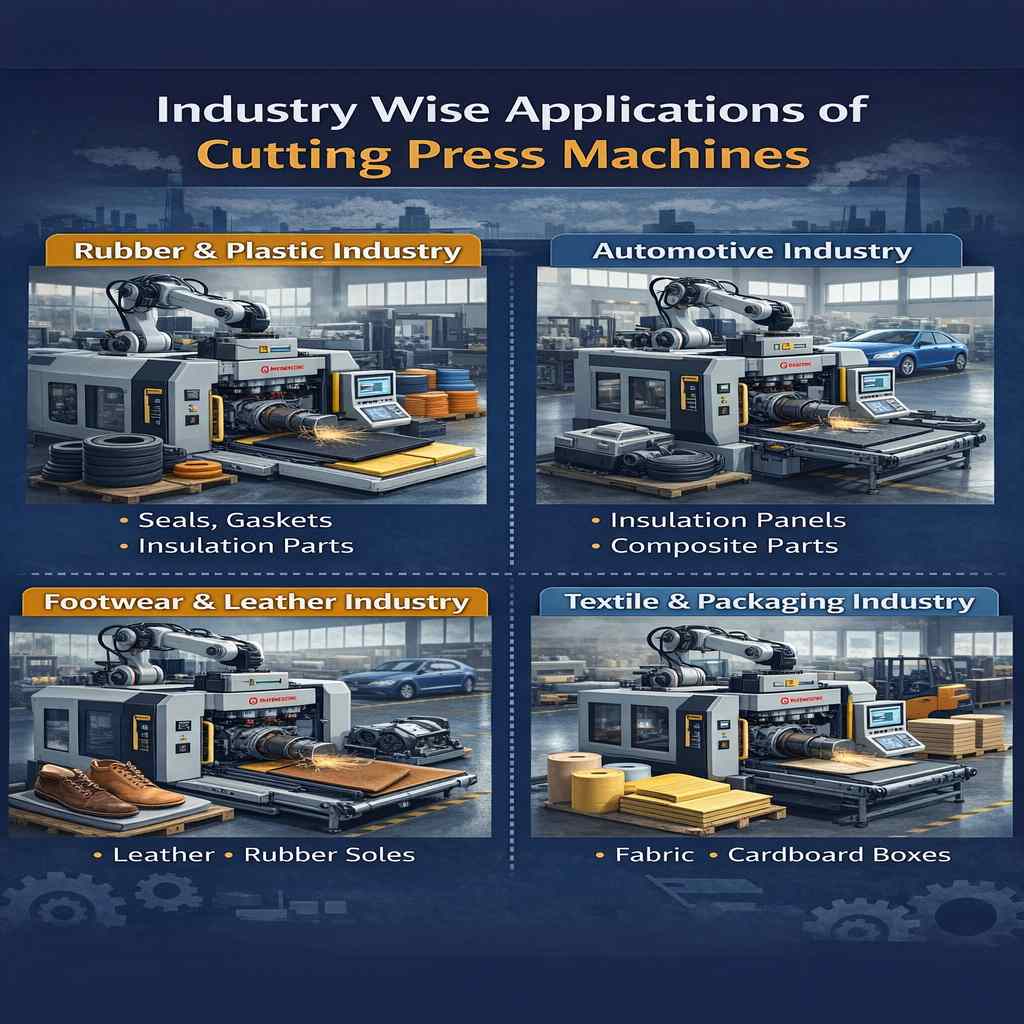
Different industries use cutting press machines to meet specific manufacturing goals.
Rubber and Plastic Manufacturing Industry
Rubber and plastic manufacturers use cutting press machines to produce seals, gaskets, molded sheets, insulation components, and industrial parts. Precision cutting ensures uniform dimensions and reduced scrap generation.
As a result, cutting press machines play a critical role in maintaining productivity and quality standards in rubber and plastic plants.
Automotive Industry
The automotive sector relies on cutting press machines for vibration dampers, insulation panels, rubber pads, and composite components. Since automotive parts require tight tolerances and repeatable accuracy, machine precision becomes essential.
Cutting press machines help automotive manufacturers meet strict quality and safety standards.
Footwear and Leather Industry
Footwear and leather manufacturers depend on cutting press machines for clean, uniform cutting of leather, synthetic materials, and rubber soles. Consistent pressure and accurate die alignment improve product finishing and reduce material wastage.
Textile and Packaging Industry
Textile and packaging industries use cutting press machines to maintain speed, consistency, and efficiency. Automated cutting processes reduce manual errors and support high-volume production.
As a result, production output improves while operational costs remain under control.
Technical Features That Define a High-Quality Cutting Press Machine
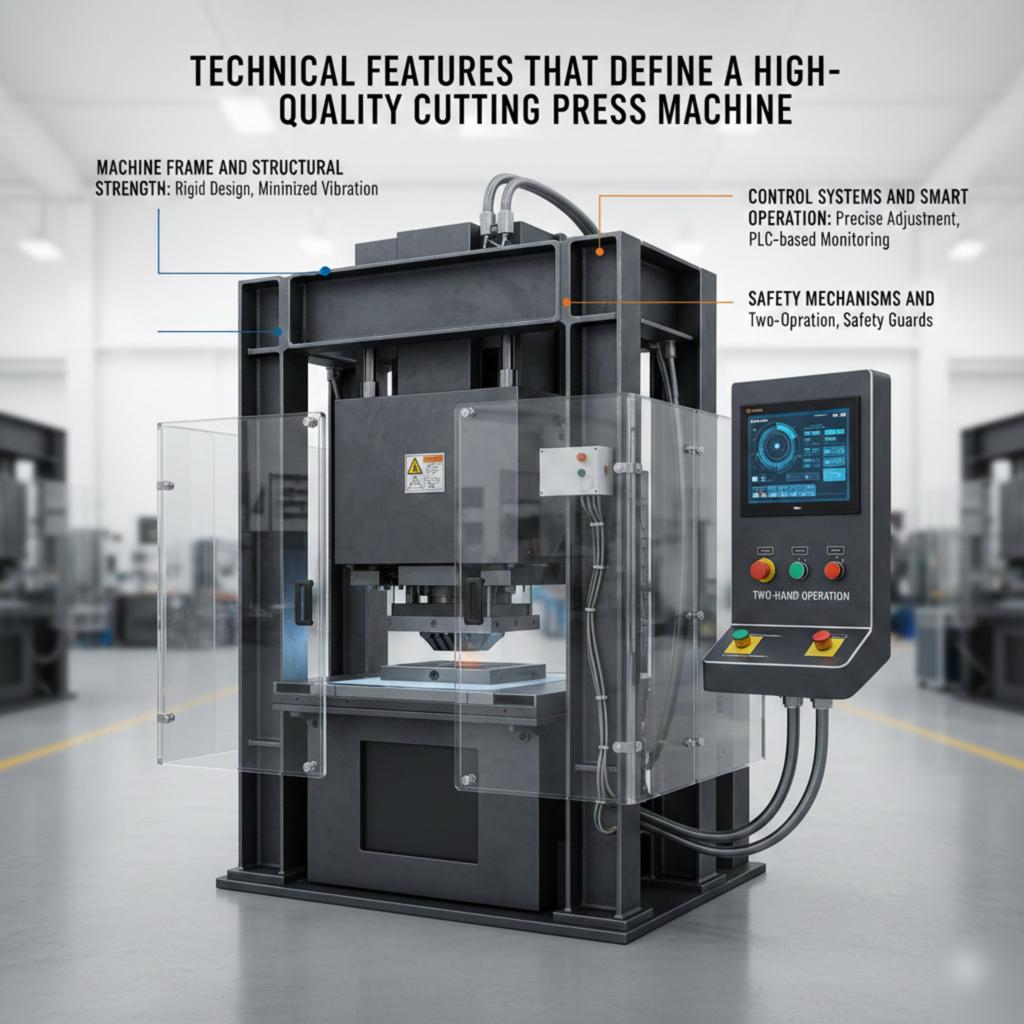
Modern cutting press machines include advanced features that enhance reliability, safety, and performance.
Machine Frame and Structural Strength
A well-designed frame also minimizes vibration, protects dies, and reduces maintenance requirements over time.
Control Systems and Smart Operation
Advanced control systems allow operators to adjust pressure, stroke length, and operating speed precisely. Smart interfaces improve ease of use and reduce setup time.
Moreover, PLC-based systems support process monitoring and error detection, which enhances overall production efficiency.
Safety Mechanisms and Compliance
Industrial safety remains a top priority in manufacturing environments. Cutting press machines must include emergency stop buttons, safety guards, and two-hand operation systems.
Well-integrated safety mechanisms protect operators and help manufacturers comply with industrial safety regulations.
Common Mistakes to Avoid While Selecting a Cutting Press Machine
Manufacturers often make avoidable errors during machine selection. Identifying these mistakes helps prevent long-term operational challenges.
Focusing Only on Initial Cost
Low-cost machines may compromise build quality, precision, and durability. As a result, frequent breakdowns increase maintenance expenses and production downtime.
Ignoring After-Sales Service and Support
Reliable service support ensures quick issue resolution and uninterrupted operations. Therefore, manufacturers should evaluate spare part availability and service responsiveness before finalizing suppliers.
Overlooking Future Production Growth
Production demands often increase over time. Hence, choosing a cutting press machine that supports future scalability prevents early replacement and additional capital investment.
How Cutting Press Machines Improve Manufacturing Efficiency
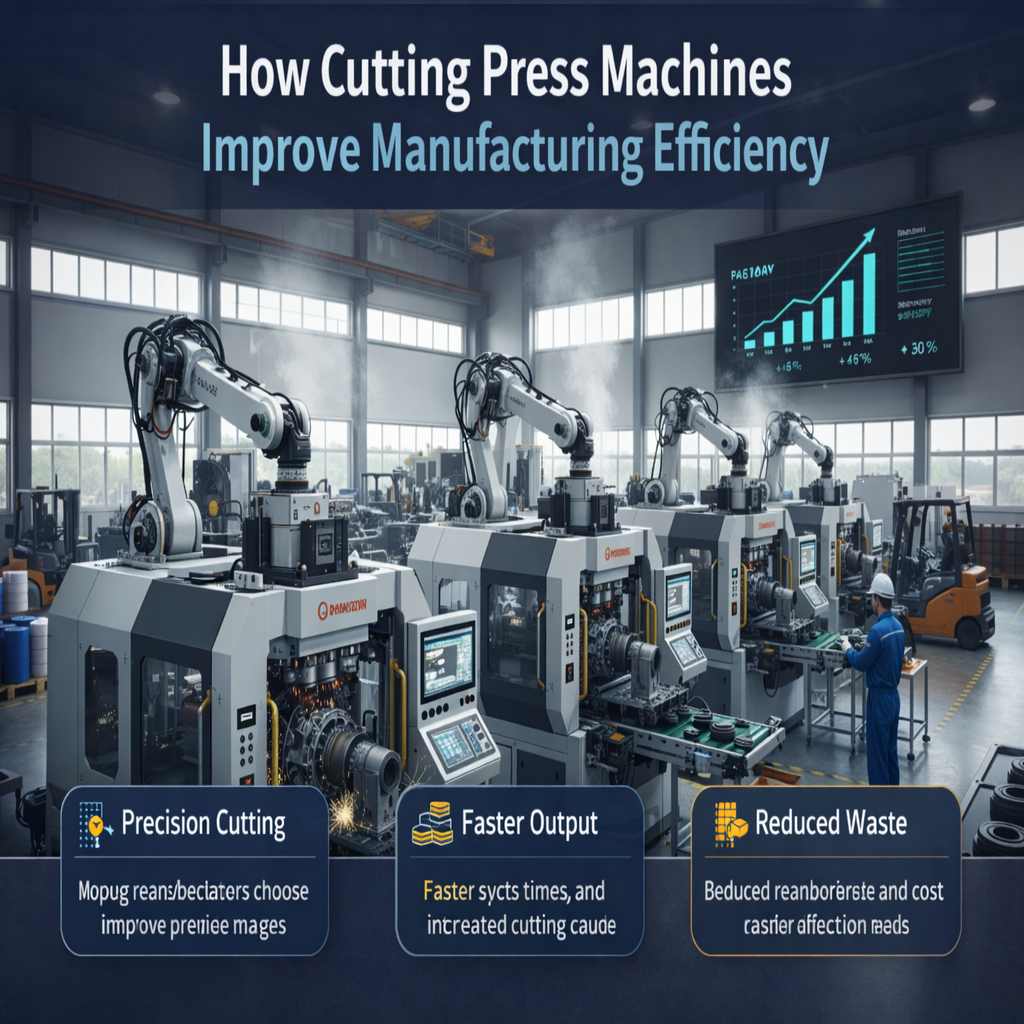
Cutting press machines improve efficiency by reducing manual labor, minimizing material wastage, and delivering consistent cutting accuracy. Additionally, automated systems support faster cycle times and better quality control.
Because of these advantages, cutting press machines have become essential assets in modern manufacturing facilities.
Maintenance Practices for Long-Term Machine Performance
Proper maintenance ensures stable performance and extends machine service life. Regular inspection of hydraulic systems, lubrication schedules, and alignment settings helps prevent unexpected downtime.
Moreover, trained operators play a crucial role in maintaining safety and efficiency during daily operations.
Future Trends in Cutting Press Machine Technology
As manufacturing technology evolves, cutting press machines are becoming smarter and more energy-efficient. Digital monitoring systems, predictive maintenance, and smart sensors improve uptime and reduce operational risks.
Furthermore, industries increasingly demand sustainable and eco-friendly machinery. Therefore, next-generation cutting press machines focus on performance optimization with reduced environmental impact.
Conclusion: Selecting the Right Cutting Press Machines for Long-Term Industrial Success
Choosing the right Cutting Press Machines srequires a clear understanding of industrial requirements, material properties, production volume, and machine features. When manufacturers align machine selection with operational goals, they achieve higher productivity, consistent quality, and long-term cost efficiency.
Ultimately, the right cutting press machines becomes a valuable asset that supports sustainable growth, operational stability, and competitive advantage in today’s demanding manufacturing landscape